Science-backed sleep programmes that help leaders and teams improve brain health, think more clearly, and perform sustainably.
Most workplace wellbeing programmes focus on isolated behaviours—nutrition, exercise, mindfulness or stress management.
My work begins somewhere different.
Sleep is the biological foundation upon which attention, emotional regulation, decision-making, learning, creativity and long-term brain health depend.
Rather than offering another collection of wellbeing tips, I have spent three decades integrating biomedical science, sleep research, behavioural psychology and nervous system regulation into one practical framework that creates meaningful, sustainable change.
Understanding Human Performance Through Sleep As The Primary Foundation & Mechanism For Sustained Success
🧠 Scientific Foundation
Everything begins with understanding human biology.
My work is grounded in biochemistry, sleep science and neuroscience, translating complex research into practical strategies that improve sleep, cognitive performance, emotional regulation and long-term brain health.
🌱 Human Behaviour & Lasting Change
Knowledge alone rarely changes behaviour.
By combining sleep science with behavioural psychology, nervous system regulation, breathwork, hypnosis and Neuro-Linguistic Programming (NLP), I help people build simple Micro-Neuro Habits™ that become sustainable, automatic and life-enhancing.
⭐ Practical Application
Science is only valuable when it improves real lives.
Through my proprietary 9 Pillars Sleep Method™ and Your Sleep Advantage™, I help organisations translate evidence into everyday habits that strengthen wellbeing, leadership, decision-making and workplace performance.
THE METHOD BEHIND THE RESULTS
MY SCIENTIFIC JOURNEY
Three decades of curiosity, science and practical application.
For as long as I can remember, I have been fascinated by one question:
Why do some people thrive while others simply survive?
That question led me into biochemistry, sleep science, neuroscience, psychology and human behaviour. Over the past three decades, my work has evolved through scientific research, clinical learning, education and thousands of hours working directly with individuals, leaders and organisations.
Today, that lifelong journey forms the foundation of my proprietary 9-Pillars Sleep Method™ and Your Sleep Advantage™—frameworks that translate complex science into practical, sustainable habits that improve brain health, leadership and human performance.
A Journey of Learning & Application
🎓 Biomedical Foundations
Bachelor of Science (Honours)
Biochemistry & Immunology
Developed a deep understanding of human physiology, biochemistry and the biological systems that underpin health and performance.
😴 Sleep Science Research
Graduate Certificate in Research (Sleep Science)
Research experience through the Appleton Institute, Centre for Sleep Research (CQUniversity), exploring sleep, breathing, cognitive arousal and human performance.
🧠 Human Behaviour
Master Practitioner of Neuro-Linguistic Programming (NLP)
Clinical Hypnotherapy
Internationally accredited Yoga, Meditation & Breathwork Teacher
More than 20 years helping people translate knowledge into lasting behavioural change.
🌏 Real-World Application
Applied this work across:
Executive leadership teams
Corporate organisations
Luxury wellness retreats
Government departments
Universities
Health professionals
Community education
Every experience has refined and strengthened the practical application of the science.
💡 Today
Today my work integrates biomedical science, sleep research, behavioural psychology and nervous system regulation into practical frameworks that help organisations build healthier brains, stronger leaders and sustainable performance.
When we understand how the brain and body work together, better performance becomes a natural consequence—not something we have to force. - Sabine Christelli
My Body of Work- The Frameworks Behind My Work
9 Pillars Sleep Method™
The foundation
A comprehensive framework that identifies the biological, behavioural and environmental factors influencing sleep, brain health and human performance.
Micro-Neuro Habits™
The implementation
Small, evidence-based daily actions that work with the brain's natural learning processes to create lasting behavioural change.
Your Sleep Advantage™
The application
The organisational framework that translates sleep science into healthier brains, stronger leadership, improved decision-making and sustainable workplace performance.
SLEEP IS YOUR COMPETITIVE ADVANTAGE.
Performance starts with rest — and the quality of your organisation’s results begins with the quality of your leaders’ sleep.
Sabine helps organisations, executives, and teams restore energy, focus, and emotional resilience through evidence-based sleep science and practical micro-habits.
Well-rested leaders make sharper decisions, inspire stronger teams, and create healthier, more productive workplaces.
How Sabine Can Work With You:
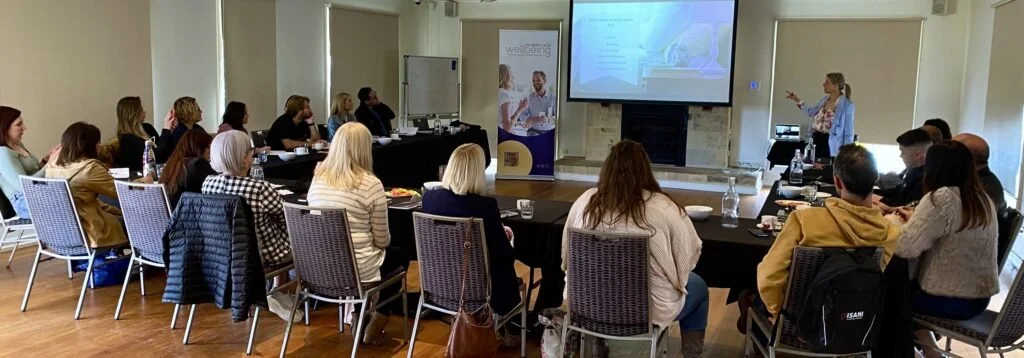
Workshops & leadership training
Corporate wellness programs
Speaking engagements & events
Corporate Sleep & Performance Solutions
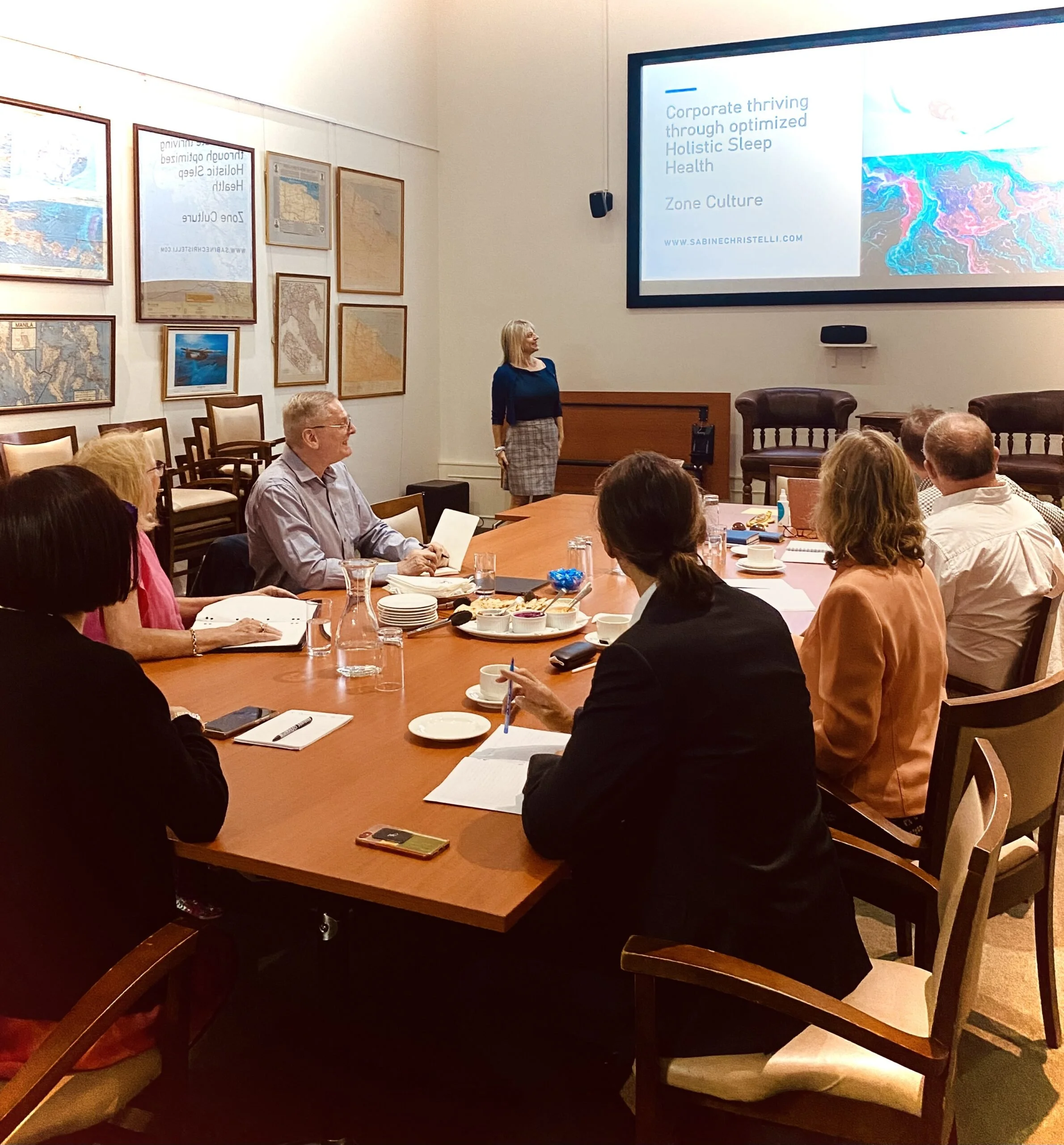
Workshops & Retreats
REST WELL. LIVE WELL. LEAD WELL.
Sabine’s workshops and retreats are designed to help teams step away from the daily pressures of work and reconnect with clarity, balance, and sustainable energy.
Blending neuroscience, mindfulness, and practical wellbeing tools, each experience is tailored to support leaders and employees in managing stress, improving focus, and enhancing overall sleep quality.
Focus areas include:
• Sleep optimisation programs for individuals and teams
• Stress and energy management
• Restorative practices for focus and mental clarity
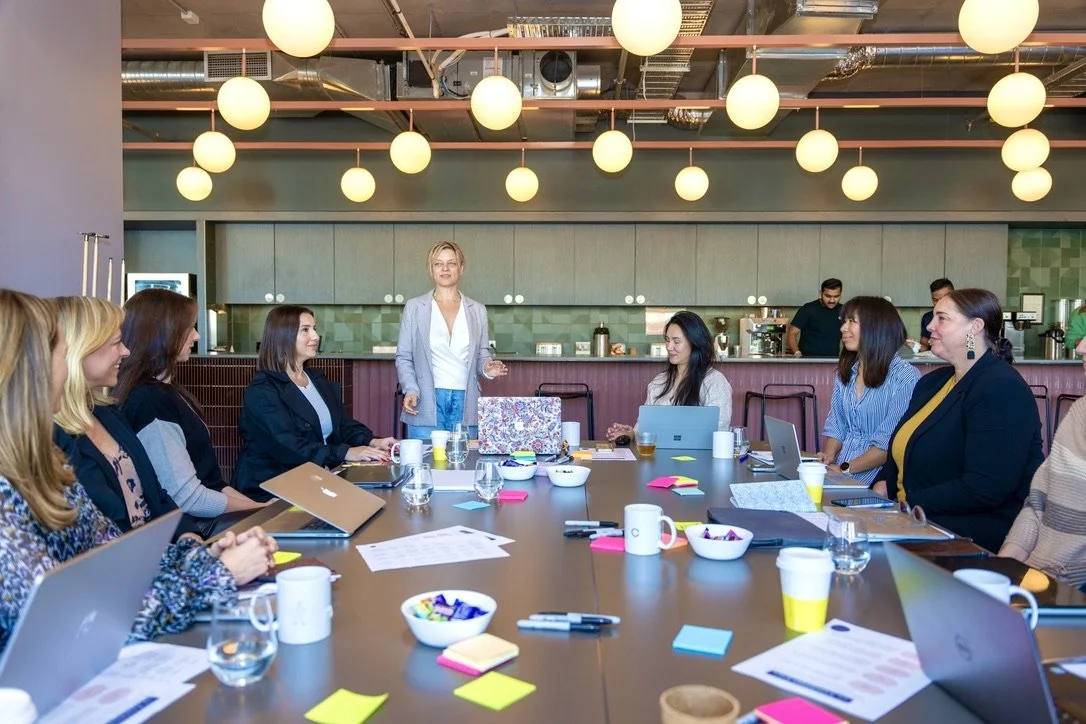
Speaking Engagements
INSPIRE. EDUCATE. RECHARGE.
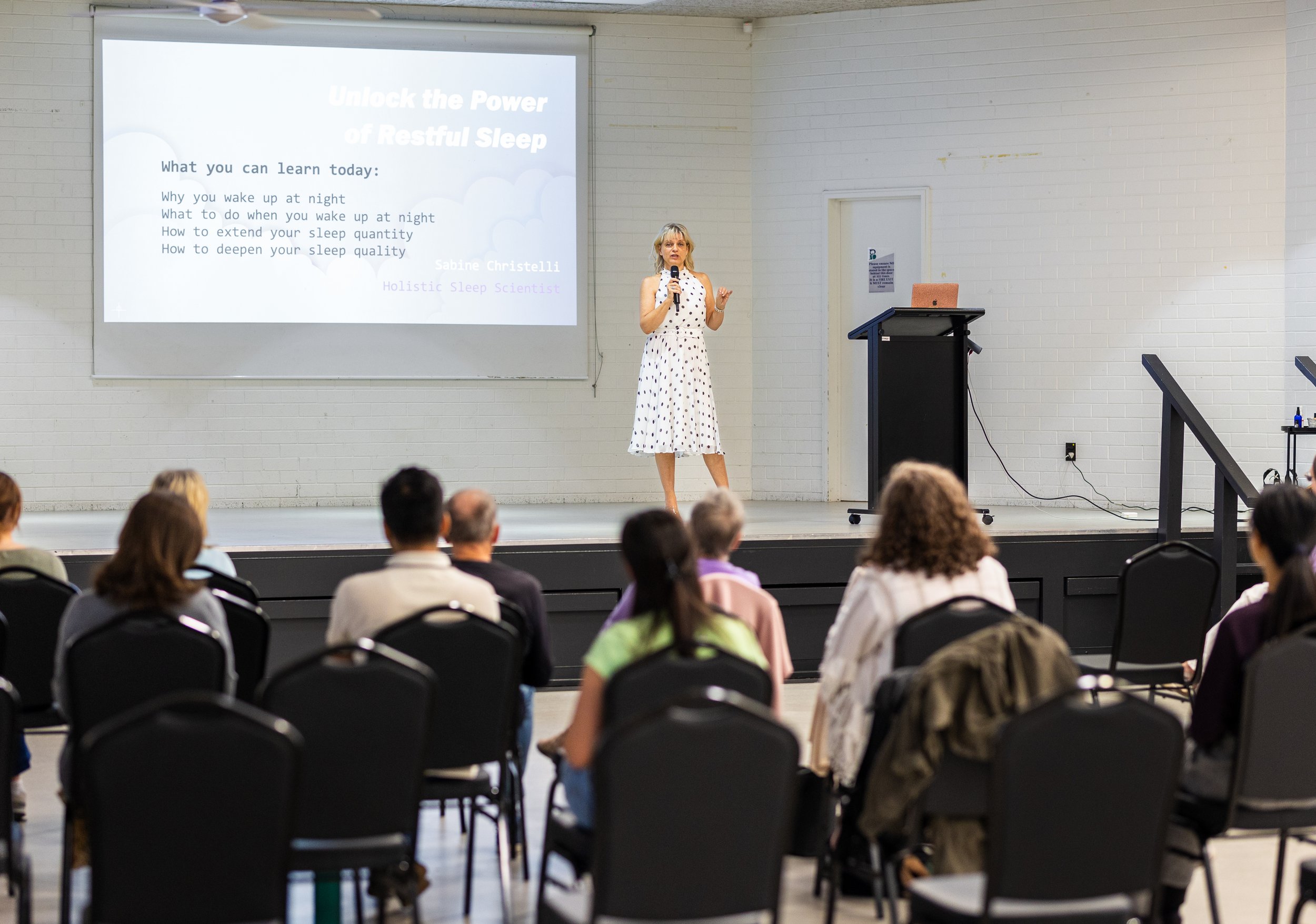
Sabine delivers dynamic, evidence-based presentations that empower audiences to rethink their relationship with rest and performance.
From conferences and wellness summits to internal leadership events, her talks combine the science of sleep with practical strategies for resilience, focus, and peak performance.
Popular topics include:
• The Neuroscience of Sleep & Leadership
• How Rest Drives Resilience and Innovation
• Mindful Performance: The Future of Workplace Wellbeing
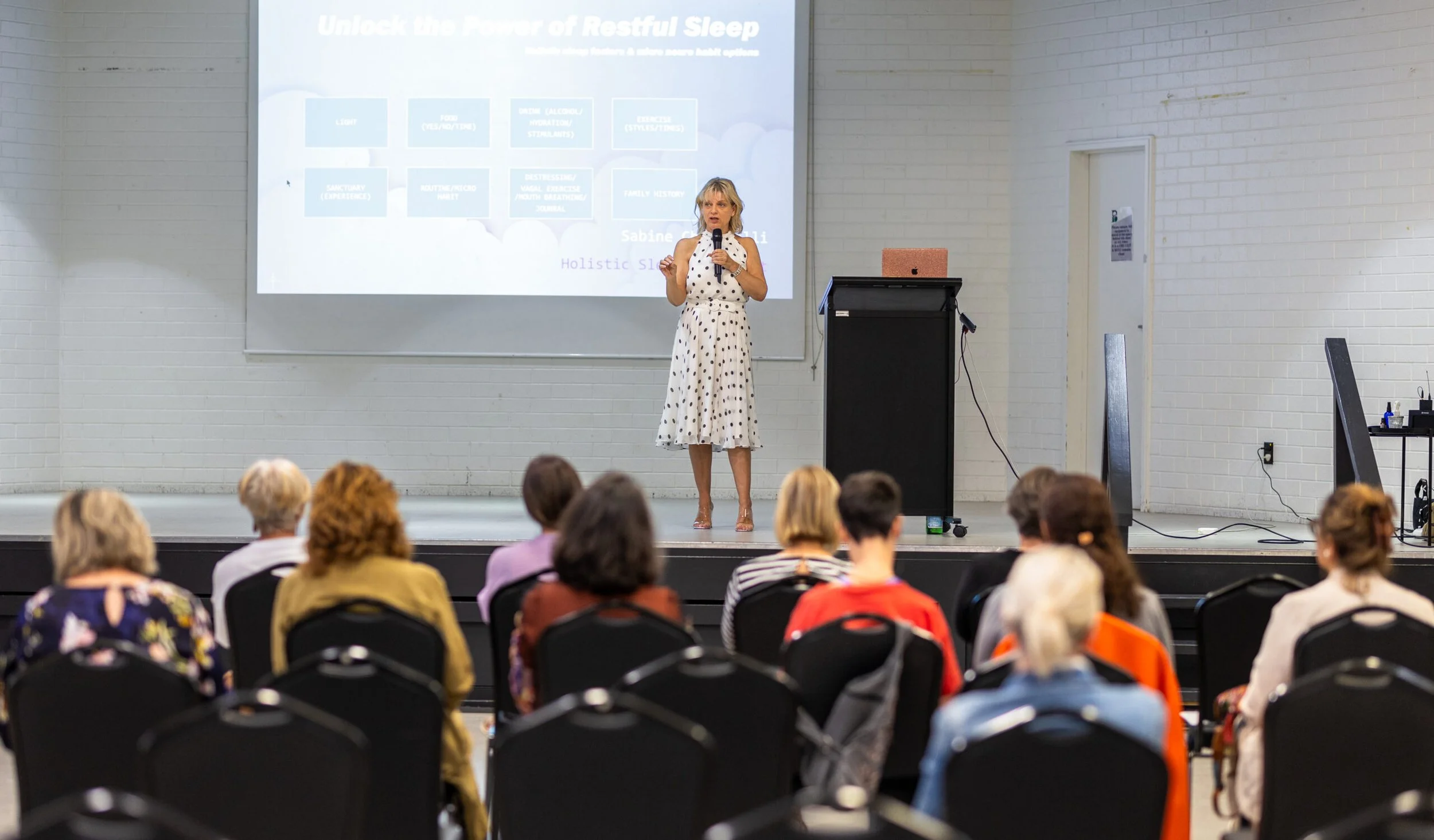
Ready to recharge your team’s energy and performance?
Let’s create a well-rested workplace where clarity, creativity, and results thrive. Not sure yet? Explore more about the science behind my work below.
Or use the form to enquire about availability and options.
Curiosity. Questions. Exploration. Learning. Unlearning. New Hypotheses.
For those interested in the research, academic journey and experiences that have shaped my approach over the past three decades, I've shared a more detailed overview below.
Research & Scientific Background
Some earlier academic records and publications appear under my former name, Sabine Harrer.
My scientific journey has crossed several areas of biomedical and sleep research. Rather than following one narrow academic pathway, I worked across laboratories and disciplines that deepened my understanding of human biology, disease, prevention, sleep and behaviour.
These experiences later became part of the scientific foundation for the 9 Pillars Sleep Method™, Micro-Neuro Habits™ and Your Sleep Advantage™.
Academic Qualifications
Bachelor of Science (Honours), Biochemistry and Immunology — Flinders University
Graduate Certificate in Research — CQUniversity, completed following my PhD candidature at the Appleton Institute
PhD research focus: The Effects of Breathing Patterns on Sleep Onset Insomnia
PhD supervisors: Associate Professor Charli Sargent and Professor Drew Dawson
Biomedical Research Experience
Honours Research — Flinders University
Supervisor: Professor Kerry Owen Cox
My Honours research investigated the potential use of urocanic acid in sunscreen development, using a mouse model to examine ultraviolet-related skin and immune responses.
Professor Kerry Cox was an immunologist at Flinders University and held senior roles in cellular and clinical immunology. Historical Flinders records identify him as Director of Cellular Immunology and as an academic in immunology.
Research areas
Immunology
Biochemistry
Photobiology
Ultraviolet radiation
Skin protection
Mouse-model research
Molecular Microbiology and Pneumococcal Vaccine Research
Molecular Microbiology Unit, Women’s and Children’s Hospital
Laboratory head: Professor James C. Paton
I worked in Professor James Paton’s laboratory on pneumococcal vaccine and molecular-microbiology research.
Professor Paton led the hospital’s Molecular Microbiology Unit from 1980 to 2000. His research career focused on the pathogenesis and prevention of pneumococcal disease and the development of improved pneumococcal vaccines.
I contributed to research involving a genetically modified, detoxified form of pneumolysin expressed through an attenuated bacterial vaccine vector.
People associated with the laboratory and publication
Professor James C. Paton
Dr Judy K. Morona
Professor Renato Morona
Dr Robert A. Lock
Dr Anne M. Berry
Dr David Hansman
Laboratory experience
Recombinant DNA and bacterial genetic-modification work
Bacterial culture and transformation
Gel electrophoresis
High-pressure bacterial-cell disruption using a French press
Preparation of bacterial proteins and laboratory materials
Mouse-model research
Peer-reviewed publication under Sabine Harrer
Paton, J. C., Morona, J. K., Harrer, S., Hansman, D., & Morona, R. (1993). Immunization of mice with Salmonella typhimurium C5 aroA expressing a genetically toxoided derivative of the pneumococcal toxin pneumolysin. Microbial Pathogenesis.
Paediatric Renal Research
Renal Unit, Adelaide Children’s Hospital / Women’s and Children’s Hospital
I worked as a Research Assistant in paediatric renal research with:
Dr Anne Martin
Dr Fred Jureidini
Dr Margie van Renen
Research area
Kidney disease and renal failure
Paediatric renal research
Biochemical and protein-related laboratory investigations
Laboratory experience
High-performance liquid chromatography
Gel electrophoresis
Protein and biochemical analysis
I would keep the description at this level until we confirm the exact project title and publication record.
Nuchal Ligament and Connective-Tissue Research
Department of Pathology, University of Adelaide
Researcher: Dr Mark Gibson
I worked as a Research Assistant with Dr Mark Gibson on research involving the nuchal ligament and connective-tissue biology.
Published work from Dr Gibson’s group confirms his affiliation with the University of Adelaide’s Department of Pathology and the group’s extracellular-matrix research involving nuchal-ligament-derived cells and tissues.
Research areas
Nuchal ligament
Connective tissue
Extracellular matrix
Collagen and microfibril biology
Pathology research
Prostate Cancer Research Scholarship
Flinders University
Supervisor: Professor Wayne Tilley
I received a research scholarship to undertake work in Professor Wayne Tilley’s prostate-cancer research environment.
Research area
Prostate cancer biology
Androgen-related cancer research
Molecular and cellular cancer research
I chose not to continue along that pathway because my primary cancer-research interest at the time was breast cancer, and the available breast-cancer PhD places had already been filled.
Sleep Science Research and PhD Candidature
Appleton Institute, CQUniversity
School of Health, Medical and Applied Sciences
My PhD candidature investigated:
The Effects of Breathing Patterns on Sleep Onset Insomnia
The proposed research examined whether precisely controlled slow-breathing patterns could reduce hyperarousal and shorten sleep-onset latency. The programme included planned laboratory and field studies using objective and subjective measures of sleep, including polysomnography, validated sleep questionnaires, respiratory rate and heart rate.
Supervisors
Associate Professor Charli Sargent
Professor Drew Dawson
Research areas
Sleep-onset latency
Sleep-onset insomnia
Breathing patterns
Hyperarousal
Autonomic nervous-system regulation
Parasympathetic activation
Polysomnography
Subjective and objective sleep measurement
Circadian rhythms
Behavioural sleep interventions
The research proposal involved three sequential studies: a laboratory pilot, a multi-night sleep-laboratory experiment and a field study in participants’ homes.
Research Assistant Work at the Appleton Institute
While undertaking an unfunded PhD, I also worked as a Research Assistant on other Appleton Institute projects.
Work with Associate Professor Grace Vincent
Grace Vincent’s research programme centres on:
Improving sleep and health in workplaces
Understanding how physical activity and diet influence sleep
Developing behavioural interventions that support better sleep health
Work with Dr Charlotte Gupta
Charlotte Gupta’s research focuses on:
Sleep and nutrition
Shift-worker health
Meal timing
Laboratory and field studies with shift workers
Translation of research into industry practice and policy
Work with Dr Dean Miller
I supported studies led by Dr Dean Miller, including research using WHOOP wearable devices to collect physiological and sleep-related data.
My contribution included research-assistant support for wearable-based studies and participant-related research activities.
Other Appleton research environment
The Appleton Institute’s Adelaide research programme includes sleep and biological rhythms, workplace health, physical activity, nutrition, fatigue, shift work and operational performance. Its Adelaide facility includes a six-bed sleep laboratory.
Your role can therefore be described accurately as:
Research Assistant and PhD Candidate within the Appleton Institute’s sleep-research environment, contributing to laboratory and applied studies involving sleep, physical activity, wearable monitoring, nutrition, human performance and workplace health.
University Teaching Experience
University of Adelaide — Medical Education
Problem-Based Learning Tutor in Medicine Adelaide University
Worked with Carole Gannon
Facilitated small-group discussion, critical thinking and self-directed learning for medical students
University of Adelaide — Dental Education
First-year biology tutor for dental students
Worked with Dr Elisabeth Farmer
How This Shaped My Work
My research appointments were varied, but the underlying curiosity remained consistent: understanding the biological and behavioural processes that shape health and human functioning.
The laboratory work developed scientific rigour and systems thinking. University teaching strengthened my ability to facilitate learning rather than merely deliver information. Sleep research brought biology, behaviour, breathing, environment and daily choices together.
That integration now underpins:
9 Pillars Sleep Method™ — the educational framework, with nine core pillars and two advanced bonus pillars
Micro-Neuro Habits™ — the personalised behaviour-change process each participant develops through guided reflection and self-awareness
Your Sleep Advantage™ — the organisational application for leadership, brain health, workplace culture and sustainable performance
Curious about the science behind my work?