
The Method Behind the Results
My Scientific Journey.
Three decades of curiosity, science and practical application.
For as long as I can remember, I have been fascinated by one question:
Why do some people thrive while others simply survive?
That question led me into biochemistry, sleep science, neuroscience, psychology and human behaviour. Over the past three decades, my work has evolved through scientific research, clinical learning, education and thousands of hours working directly with individuals, leaders and organisations.
Today, that lifelong journey forms the foundation of my proprietary 9-Pillars Sleep Method™ and Your Sleep Advantage™ - frameworks that translate complex science into practical, sustainable habits that improve brain health, leadership and human performance.
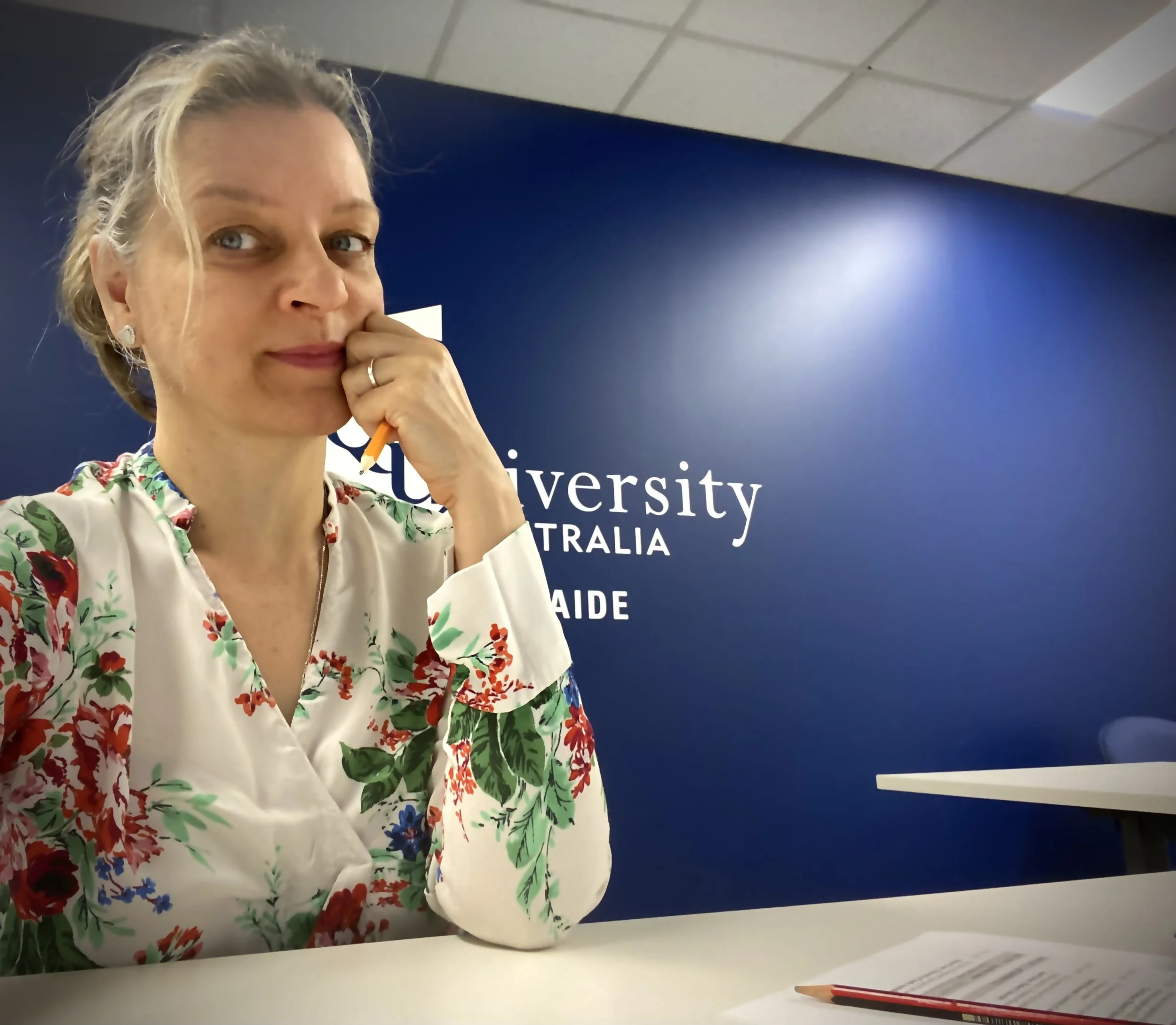
Research, my academic journey and experiences have shaped my approach over the past three decades.
My scientific journey has crossed several areas of biomedical and sleep research. Rather than following one narrow academic pathway, I worked across laboratories and disciplines that deepened my understanding of human biology, disease, prevention, sleep and behaviour.
These experiences later became part of the scientific foundation for the 9 Pillars Sleep Method™, Micro-Neuro Habits™ and Your Sleep Advantage™.
Note: Some earlier academic records and publications appear under my former name, Sabine Harrer.
Academic Qualifications
Bachelor of Science (Honours), Biochemistry and Immunology - Flinders UniversityGraduate Certificate in Research - CQUniversity, completed following my PhD candidature at the Appleton InstitutePhD research focus: The Effects of Breathing Patterns on Sleep Onset InsomniaPhD supervisors: Associate Professor Charli Sargent and Professor Drew Dawson
Biomedical Research Experience
Honours Research - Flinders University
Supervisor: Professor Kerry Owen Cox
My Honours research investigated the potential use of urocanic acid in sunscreen development, using a mouse model to examine ultraviolet-related skin and immune responses.Professor Kerry Cox was an immunologist at Flinders University and held senior roles in cellular and clinical immunology. Historical Flinders records identify him as Director of Cellular Immunology and as an academic in immunology.Research areas
ImmunologyBiochemistryPhotobiologyUltraviolet radiationSkin protectionMouse-model research
Molecular Microbiology and Pneumococcal Vaccine Research
Molecular Microbiology Unit, Women’s and Children’s Hospital
Laboratory head: Professor James C. Paton
I worked in Professor James Paton’s laboratory on pneumococcal vaccine and molecular-microbiology research.Professor Paton led the hospital’s Molecular Microbiology Unit from 1980 to 2000. His research career focused on the pathogenesis and prevention of pneumococcal disease and the development of improved pneumococcal vaccines.I contributed to research involving a genetically modified, detoxified form of pneumolysin expressed through an attenuated bacterial vaccine vector.
People associated with the laboratory and publication
Professor James C. PatonDr Judy K. MoronaProfessor Renato MoronaDr Robert A. LockDr Anne M. BerryDr David Hansman
Laboratory experience
Recombinant DNA and bacterial genetic-modification workBacterial culture and transformationGel electrophoresisHigh-pressure bacterial-cell disruption using a French pressPreparation of bacterial proteins and laboratory materialsMouse-model research
Peer-reviewed publication under Sabine Harrer
Paton, J. C., Morona, J. K., Harrer, S., Hansman, D., & Morona, R. (1993). Immunization of mice with Salmonella typhimurium C5 aroA expressing a genetically toxoided derivative of the pneumococcal toxin pneumolysin. Microbial Pathogenesis.
Paediatric Renal Research
Renal Unit, Adelaide Children’s Hospital / Women’s and Children’s Hospital
I worked as a Research Assistant in paediatric renal research with:
Dr Anne MartinDr Fred JureidiniDr Margie van Renen
Research area
Kidney disease and renal failurePaediatric renal researchBiochemical and protein-related laboratory investigations
Laboratory experience
High-performance liquid chromatographyGel electrophoresisProtein and biochemical analysis
Nuchal Ligament and Connective-Tissue Research
Department of Pathology, University of Adelaide
Researcher: Dr Mark Gibson
I worked as a Research Assistant with Dr Mark Gibson on research involving the nuchal ligament and connective-tissue biology.Published work from Dr Gibson’s group confirms his affiliation with the University of Adelaide’s Department of Pathology and the group’s extracellular-matrix research involving nuchal-ligament-derived cells and tissues.Research areas
Nuchal ligamentConnective tissueExtracellular matrixCollagen and microfibril biologyPathology research
Prostate Cancer Research Scholarship
Flinders University
Supervisor: Professor Wayne Tilley
I received a research scholarship to undertake work in Professor Wayne Tilley’s prostate-cancer research environment.Research area
Prostate cancer biologyAndrogen-related cancer researchMolecular and cellular cancer research
Sleep Science Research and PhD Candidature
Appleton Institute, CQUniversity
School of Health, Medical and Applied Sciences
My PhD candidature investigated: The Effects of Breathing Patterns on Sleep Onset Insomnia
The proposed research examined whether precisely controlled slow-breathing patterns could reduce hyperarousal and shorten sleep-onset latency. The programme included planned laboratory and field studies using objective and subjective measures of sleep, including polysomnography, validated sleep questionnaires, respiratory rate and heart rate.
Supervisors
Associate Professor Charli SargentProfessor Drew Dawson
Research areas
Sleep-onset latencySleep-onset insomniaBreathing patternsHyperarousalAutonomic nervous-system regulationParasympathetic activationPolysomnographySubjective and objective sleep measurementCircadian rhythmsBehavioural sleep interventions
The research proposal involved three sequential studies: a laboratory pilot, a multi-night sleep-laboratory experiment and a field study in participants’ homes.Research Assistant Work at the Appleton Institute
While undertaking an unfunded PhD, I also worked as a Research Assistant on other Appleton Institute projects.
Work with Associate Professor Grace Vincent
Grace Vincent’s research programme centres on:Improving sleep and health in workplacesUnderstanding how physical activity and diet influence sleepDeveloping behavioural interventions that support better sleep health
Work with Dr Charlotte Gupta
Charlotte Gupta’s research focuses on:Sleep and nutritionShift-worker healthMeal timingLaboratory and field studies with shift workersTranslation of research into industry practice and policy
Work with Dr Dean Miller
Supported studies led by Dr Dean Miller, including research using WHOOP wearable devices to collect physiological and sleep-related data.Contributions included research-assistant support for wearable-based studies and participant-related research activities.
Other Appleton research environment
Research Assistant and PhD Candidate within the Appleton Institute’s sleep-research environmentThe Appleton Institute’s Adelaide research programme includes sleep and biological rhythms, workplace health, physical activity, nutrition, fatigue, shift work and operational performance. Its Adelaide facility includes a six-bed sleep laboratory.Contributing to laboratory and applied studies involving sleep, physical activity, wearable monitoring, nutrition, human performance and workplace health.
University Teaching Experience
University of Adelaide - Medical Education (with Carole Gannon)
Problem-Based Learning Tutor in Medicine, Adelaide UniversityFacilitated small-group discussion, critical thinking and self-directed learning for medical students
University of Adelaide - Dental Education (with Dr Elisabeth Farmer)
First-year biology tutor for dental students
How This Has Shaped My Work
My research appointments were varied, but the underlying curiosity remained consistent: understanding the biological and behavioural processes that shape health and human functioning.
The laboratory work developed scientific rigour and systems thinking. University teaching strengthened my ability to facilitate learning rather than merely deliver information. Sleep research brought biology, behaviour, breathing, environment and daily choices together.
That integration now underpins:
9 Pillars Sleep Method™ - the educational framework, with nine core pillars and two advanced bonus pillars
Micro-Neuro Habits™ - the personalised behaviour-change process each participant develops through guided reflection and self-awareness
Your Sleep Advantage™ - the organisational application for leadership, brain health, workplace culture and sustainable performance
Research & Scientific Background
The Framework
Scientific Foundation
Everything begins with understanding human biology.
My work is grounded in biochemistry, sleep science and neuroscience, translating complex research into practical strategies that improve sleep, cognitive performance, emotional regulation and long-term brain health.
Human Behaviour &
Lasting Change
Knowledge alone rarely changes behaviour.
By combining sleep science with behavioural psychology, nervous system regulation, breath work, hypnosis and Neuro-Linguistic Programming (NLP), I help people build simple Micro-Neuro Habits™ that become sustainable, automatic and life-enhancing.
Practical Application
Science is only valuable when it improves real lives.
Through my proprietary
9 Pillars Sleep Method™ and Your Sleep Advantage™, I help organisations translate evidence into everyday habits that strengthen wellbeing, leadership, decision-making and workplace performance.
Ready to recharge your team’s energy and performance?
Let’s create a well-rested workplace where clarity, creativity, and results thrive. Or complete the form to enquire about availability and options.